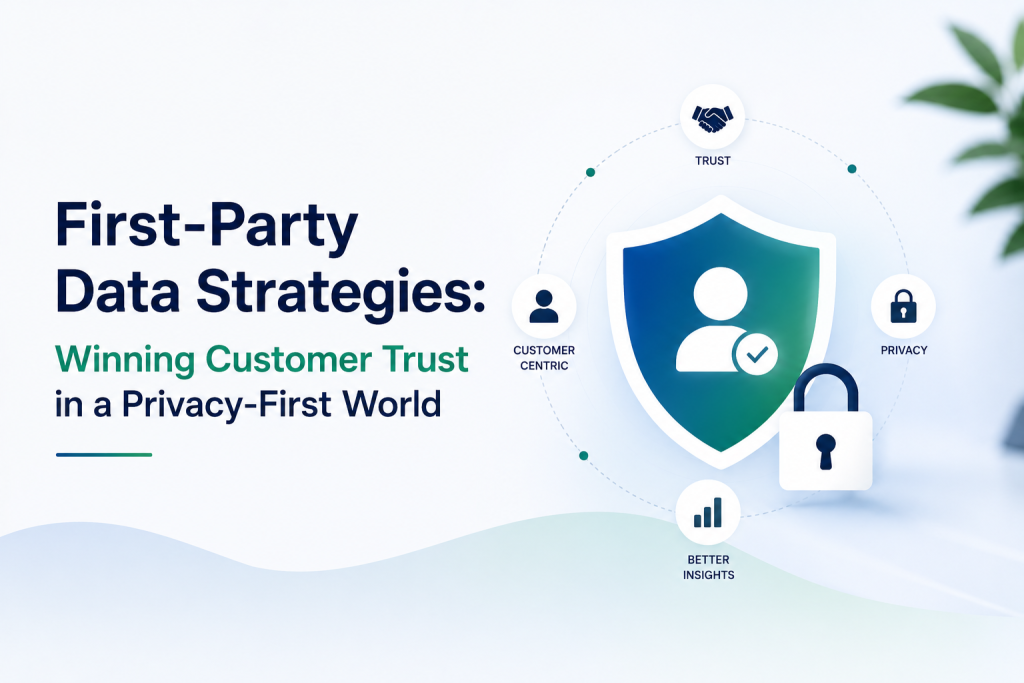
In today’s digital landscape, privacy is no longer optional—it’s expected, hence First-party data strategies are a must for the business . With third-party cookies phasing out and regulations tightening, businesses must rethink how they collect, manage, and use customer data.
The shift is clear: first-party data is becoming the foundation of modern marketing and communication strategies.
But success isn’t just about collecting data—it’s about earning trust while delivering value.
What is First-Party Data?
First-party data is the information businesses collect directly from their customers through owned channels such as websites, apps, CRM systems, SMS interactions, and customer support.
Because it comes straight from users, it is more accurate, consent-based, and privacy-compliant than third-party data.
Why First-Party Data Matters in a Privacy-First World?
As users become more privacy-conscious and regulations evolve, businesses must rely on data they collect with permission.
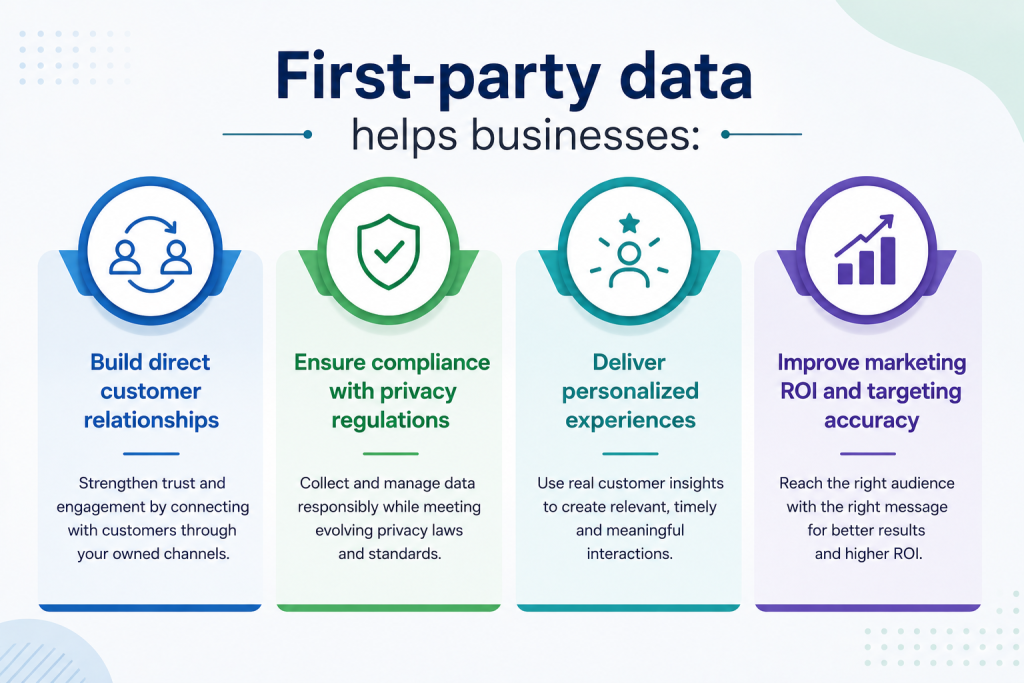
In a privacy-first world, trust becomes the gateway to data—and data drives growth.
Key First-Party Data Strategies for Businesses
- Build Transparency into Every Interaction: Clearly communicate how customer data is collected and used. Simple, honest messaging builds confidence and increases opt-in rates.
- Exchange Value for Data: Customers are more willing to share information when they receive something meaningful in return—faster updates, personalized offers, or better service experiences.
- Use Multiple Customer Touchpoints: Collect data across channels like websites, apps, SMS, and messaging platforms. This creates a more complete understanding of customer behavior.
- Focus on Data Security and Compliance: Protecting customer data is essential. Businesses must follow regulatory frameworks, use secure systems, and avoid misuse of information.
- Activate Data for Personalization: The real value of first-party data lies in how it is used. Personalized communication—such as relevant alerts, reminders, or recommendations—improves engagement and customer satisfaction.
How Messaging Channels Strengthen First-Party Data?
Messaging platforms like SMS and WhatsApp play a key role in collecting and activating first-party data. They allow businesses to:
- Capture user preferences through interactions.
- Deliver real-time, relevant communication.
- Track engagement and response behavior.
- Build consistent and direct customer relationships
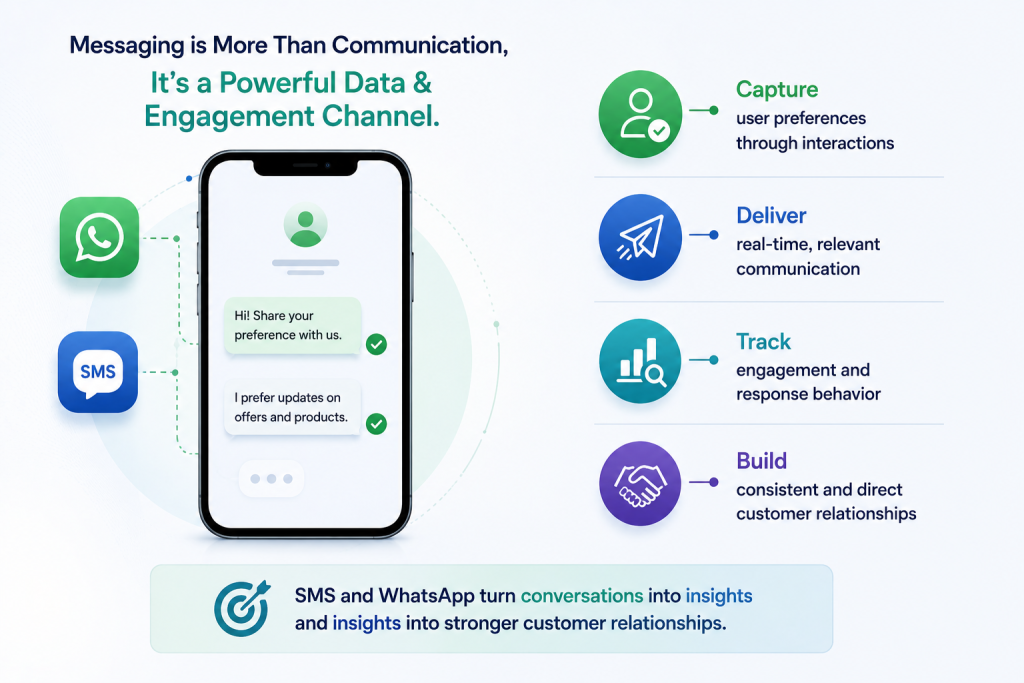
This makes messaging not just a communication tool, but a powerful data and engagement channel.
Common Challenges Businesses Face
While first-party data offers significant benefits, businesses must overcome challenges such as:
- Gaining customer trust
- Managing data across multiple platforms
- Ensuring compliance with privacy regulations
- Maintaining data accuracy and security
Addressing these challenges requires the right mix of strategy, technology, and transparency.
The Future of Customer Data
The future of marketing is built on consent, trust, and relevance.
First-party data is not just replacing third-party data—it is redefining how businesses connect with their customers. Organizations that prioritize ethical data practices and meaningful engagement will lead in the long run.
Conclusion
In a privacy-first world, data is more than an asset—it is a responsibility.
Businesses that focus on transparency, security, and value-driven communication will not only collect better data but also build stronger, long-term customer relationships.
Because in today’s digital ecosystem, trust is the true currency of growth.
Ready to build a privacy-first communication strategy? Connect with Virtuoso Netsoft to leverage secure, scalable messaging solutions: info@virtuosonetsoft.com
Follow us on Linked-In