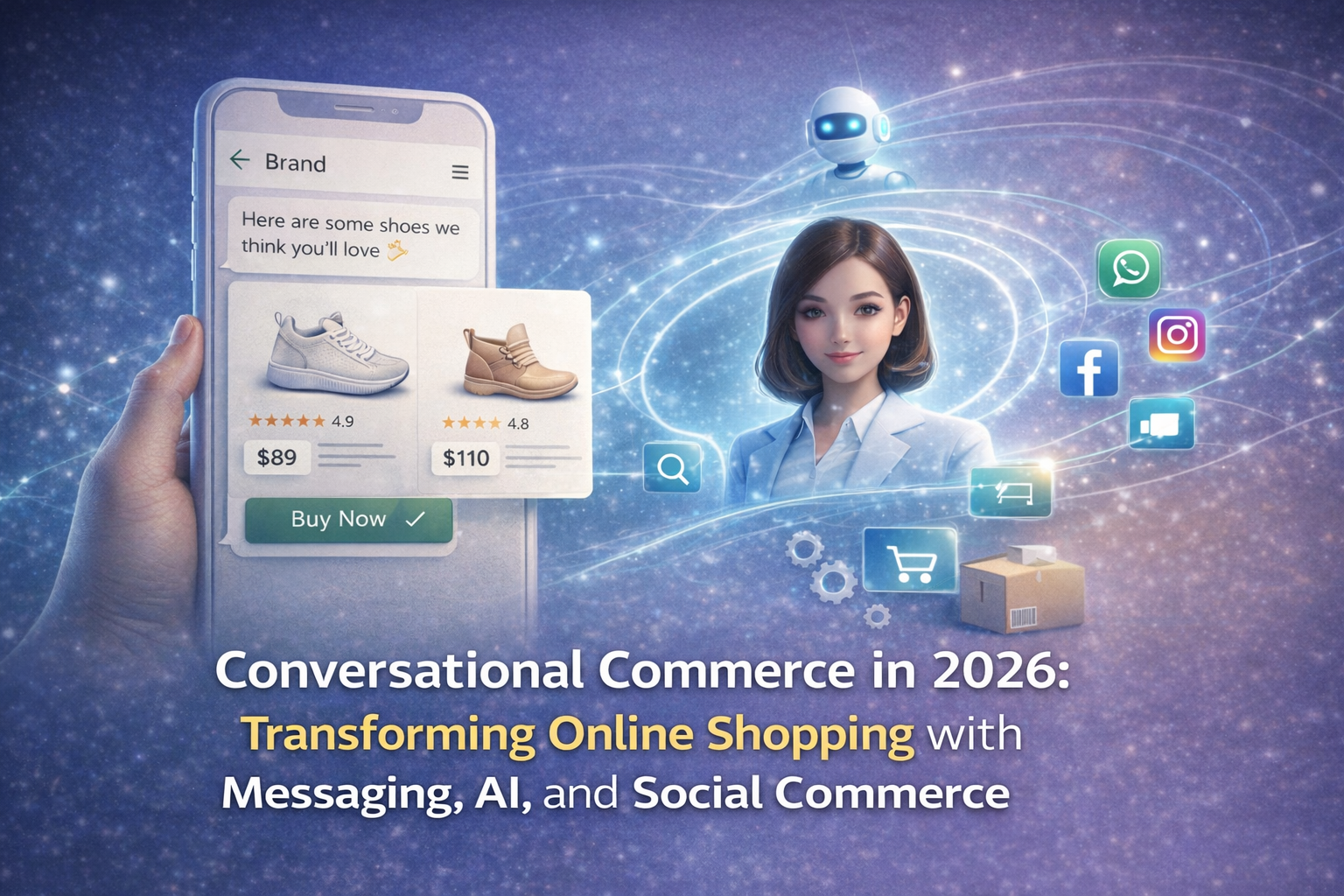
Shopping doesn’t feel the same anymore—and honestly, that’s a good thing.
Think about it. A few years ago, buying something online meant opening a website, scrolling through pages, adding items to a cart, filling out forms, and finally checking out. It worked—but it wasn’t exactly effortless.
In 2026, things look very different. Now, people don’t want to browse endlessly or go through multiple steps. They just want to ask, get an answer instantly, and buy—right there. And that’s exactly what conversational commerce is enabling.
So, What Exactly is Conversational Commerce?
In simple terms, it’s shopping through conversations.
Whether it’s through WhatsApp, RCS, or chatbots, the process feels natural—almost like talking to a person who understands what you need.
And that’s the key difference. It doesn’t feel like “shopping.” It feels like getting help.
Why Are People Moving Away from Traditional Checkout?
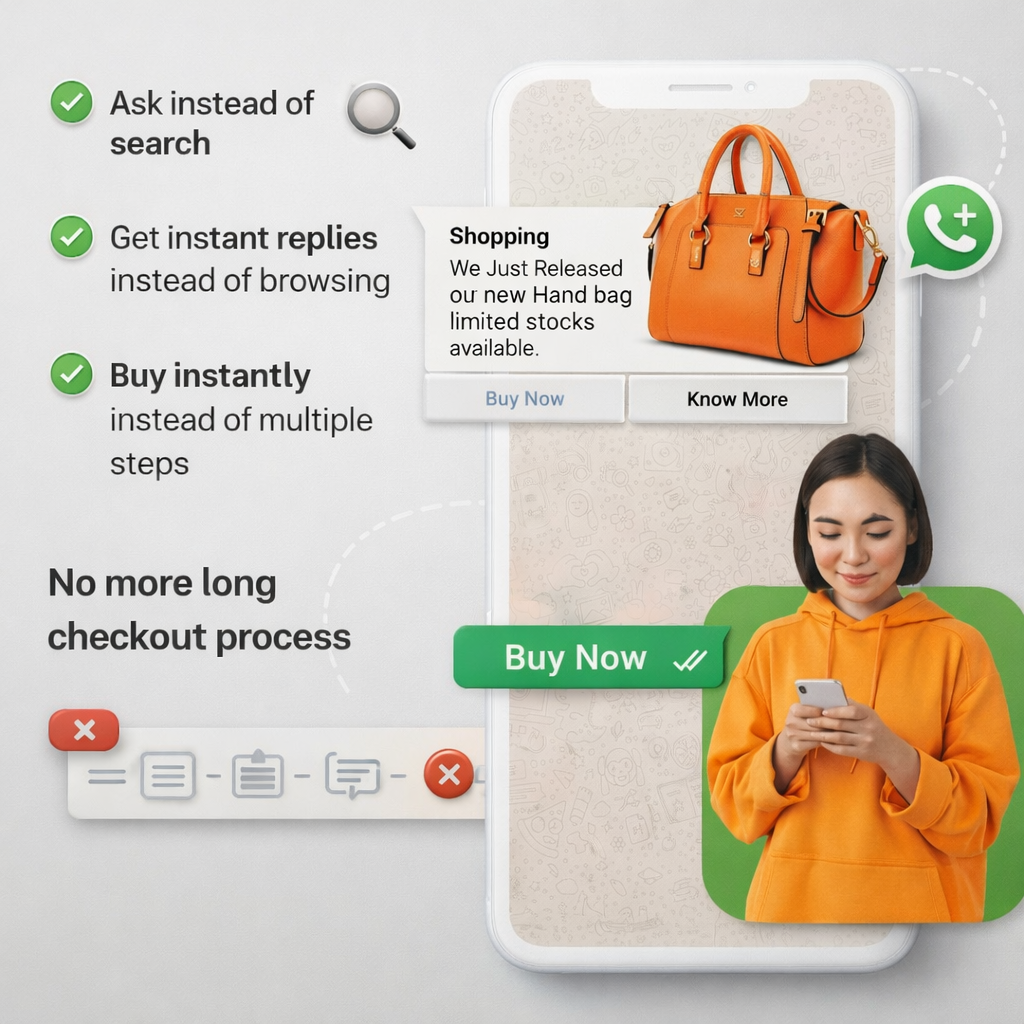
Let’s be real—no one enjoys long checkout processes.
Too many steps, too much waiting, and too many chances to drop off halfway.
That’s exactly why the way people shop is evolving. Today, instead of browsing endlessly, people would rather ask and get what they need instantly.
They expect quick responses, minimal effort, and the ability to make decisions fast—without going through multiple steps.
It’s all about convenience now—simple, quick, and aligned with how we already use our phones: through messaging.
Social Commerce is Growing Fast
Another big shift happening alongside this is social commerce.
People are no longer just discovering products on social media—they’re buying there too.
You see something on your feed, send a quick message, ask a question, and before you know it… you’ve made a purchase.
No website. No checkout page. No friction.
That’s one of the biggest social commerce trends in 2026—everything happens in one place.
Where Does AI Fit into All This?
AI is quietly powering most of this experience.
It helps brands:
-Respond instantly.
-Understand what customers want.
-Suggest the right products.
Which brings up a common question: Will AI replace e-commerce?
Not really.
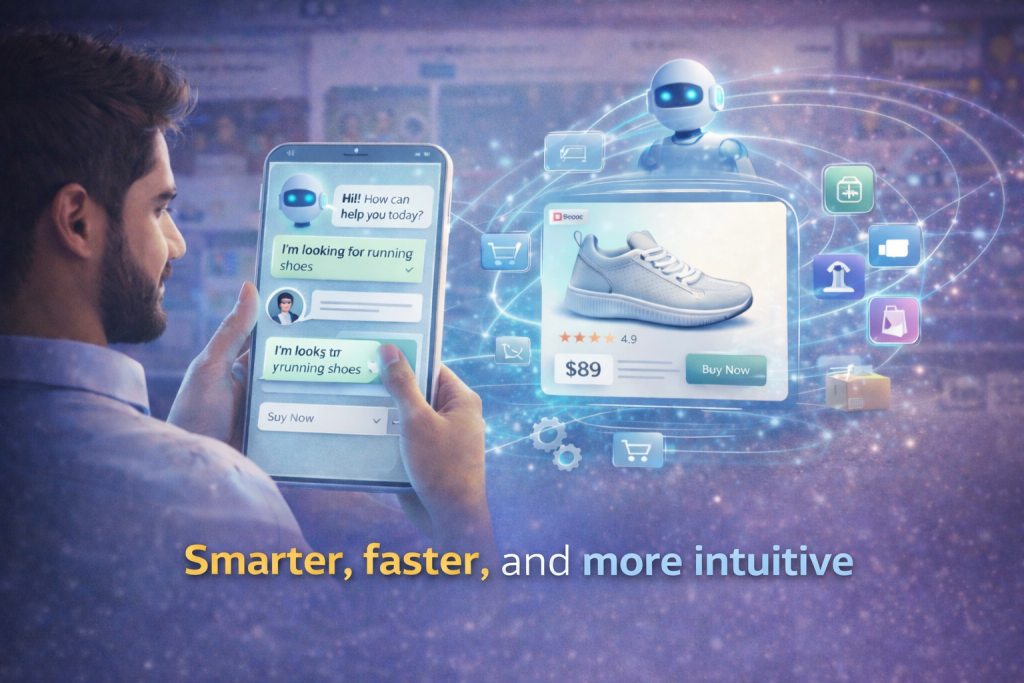
What it’s doing instead is making e-commerce smarter, faster, and more intuitive.
Instead of clicking through pages, customers are guided through conversations—and AI makes that possible at scale.
The Role of Media Networks in Modern Commerce
Another interesting shift is how media networks are blending into commerce.
Brands are no longer just selling—they’re creating experiences.
They’re using:
- Data to personalize interactions
- Content to influence decisions
- Messaging to close the sale
It’s no longer just marketing or selling—it’s a mix of both, happening in real time.
So, Is E-Commerce Still the Future?
Yes—but not in the way we knew it. E-commerce isn’t disappearing. It’s evolving. Instead of being: Website-focused. It’s becoming: Conversation-driven, Social-first, AI-powered. Customers don’t really care where they buy from anymore. They care about how easy it feels.
Why Messaging is Becoming So Powerful
Messaging works because it fits naturally into our daily lives.
We already spend hours chatting—so buying through chat just makes sense.
Here’s why it’s so effective:
- It’s instant – No waiting, no delays
- It’s interactive – You can ask, click, and act
- It’s simple – No unnecessary steps
- It’s personal – Feels like a real conversation
With technologies like RCS, messaging is becoming even richer—with images, buttons, and actions built right in.
What This Conversational evolution Means for Businesses?
For businesses, this shift is big. It means moving beyond just websites and thinking about:
- How customers interact?
- Where conversations happen?
- How quickly they can respond?
Brands that adapt to this will stand out.
The ones that don’t? They risk losing customers to those who make buying easier.
Final Thought!
The biggest change in 2026 isn’t just technology—it’s behavior. People don’t want to click through processes anymore. They want things to feel simple, quick, and natural. And that’s exactly what conversational commerce delivers.
The checkout page isn’t disappearing… It’s just turning into a conversation.